Wednesday, May 15, 2013
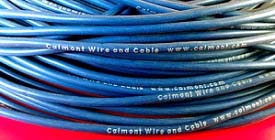
Ultraflexible wires for SuperFlex plastic materials
Thursday, February 28, 2013
Applications for Flexible Wire and Cable
- Do you need to route it through equipment or a tight space?
- Will it be subject to continuous flexing?
- Do you need the cable to flexible during use?
- Conductor stranding
- Shield types
- Cable lay
- Insulation materials.
Choosing the right insulation can also add to the cable’s flexibility. Silicone is one the most flexible of the compounds used in wire and cable. Silicone wire is used to meet a variety of demands such as extreme high and low temperature requirements, flame resistance, flexibility, strength and purity. The application of the cable and the environment that it will be exposed to also plays a role when choosing the right jacket material. Harsh environments, chemicals, and abrasion will narrow down your insulation and jacket options. Discussing your flexible wire application with an experienced cable manufacturer can help you choose the right materials for the performance and longevity of your product.
To learn more about the applications of flexible wire and other custom cable solutions, please visit: http://www.calmont.com/robotics.php
Sunday, February 10, 2013
Why Custom Wire And Cable Can Help You And Your Network
Monday, January 28, 2013
Customer Wires: The Solution to Your Cable Headaches
Friday, January 11, 2013
Custom Cable Solutions Offer Plenty of Support
Wednesday, December 19, 2012
Where to Find Robotics Wire?
Tuesday, September 25, 2012
Top 3 Reasons People chose Custom Wire
- “My existing wire keeps breaking.” Wires that break and fail are usually not designed to be repeatedly flexed or bent. High flex custom wire is normally made with high strand count conductors and sometimes with alloys. Hook up and lead wires that are off the shelf are normally available in solid core, 7 or 19 strand. This wire is intended for static installations where the wire is not required to move once it is installed and is not intended for repetitive movement and high flex applications. As the fine strands break loss of conductivity and complete failure will occur. High strand count conductors will withstand this type of environment due to the construction and number of strands. High strand count wire can sometimes be purchased off the shelf, but in most cases need to be purchased from a custom wire and cable manufacturer. Custom lead wires can be manufactured with the application in mind using materials intended to withstand movement such as robotic /automation, handheld devices, and other applications.
- “I need a more flexible wire for my project.” Ultra flexible wires are are manufactured using very high strand count conductors and flexible insulation and jacket materials which are hard to find ready-made and off the shelf. Custom wire and cable manufactures specializing in super flexible wire and cable can assist you with your flexibility requirements. There are several types of insulation that can be used to make a wire extremely flexible. Silicone insulated wires are probably the most flexible wire available together with high strand count conductors the wire can be extremely limp even described as “noodle wire” even in the larger gauge sizes.
- “I can’t find the wire I need anywhere.” This is usually the case when a small gauge wire is needed, retrofitting and repairs, or a wire becomes obsolete. Wire gauges smaller than 30AWG can be difficult to find off the shelf, turning to a custom wire manufacturer that works with small gauges is usually the only option. Custom wire can be made smaller than 50AWG by some custom wire manufacturers. Often we have requests for hookup wire and cables for equipment that needs to be repaired, updated, or overhauled. This type of situation the existing wire can’t be identified or the existing wire needs to have improved performance. Custom cable manufacturers can reverse engineer existing wire and suggest better construction or materials to achieve the improved performance and longevity of the wire.
Thursday, September 20, 2012
Custom Wire and Cable Made to Your Specifications
- Very small or odd gauge wire.
- Special materials.
- Unique construction.
- More flexibility.
- Custom colors, jacket finish, or custom printing.
Custom wire and cable manufacturers take the application into consideration when designing a custom cable. The more your custom cable manufacturer knows about the environment and usage of the wire and cable the better the performance of the custom cable will be.
Have all the information about your project ready and include as much information as possible. You may not have or know all the information your cable manufacturer should be able to assist you.
- Number, size and plating of conductors
- Cable O.D.
- Voltage, operating temperature
- Impedance, EMI requirements
- Other requirements- Certifications, bio-compatibility, flex cycles, flammability.
- Include a description of how the cable will be used.
The wire and cable industry is relatively small. Get a recommendation from your contract manufacturer, industry friends and even Google. Each custom cable manufacturer has their own specialty or niche. Be sure your cable manufacturer has experience with the type of application you are working with for example, aerospace/space cables, low smoke materials, medical cables, implantable wire and cable and others. Experienced in manufacturing for your type of application will save you in delays and problems down the line.
When you get a quote from more than one, make sure the cable designs are similar. If not, find out why. It is always a good idea to compare the designs and cable components and ask questions in ensure nothing was missed with your custom cable design.
The benefits of using a custom cable over a readily available cable are many. The two main benefits of using wire and cable designed specifically for your product is going to outlast and outperform an off the shelf solution in most cases.
Readily available wire and cable is mass produced to cover a wide range of usage in a variety of industries. A generic robotic cable may work well in one robotic application may not work in a medical or aerospace robotic application. Often when using generic cables concessions are made in order to accommodate the cable.
Thursday, May 3, 2012
Custom Cable & Wire Design- 5 Myths of Custom Cable

There are many misconceptions when it comes to the subject of custom made cables. Many designers shy away from using custom cables due to not knowing what is involved or they have dealt with manufacturers who do not specialize in custom cable designs. Here are five myths that we can clear up.
1. Really expensive - People that are new to designing products often think you need thousands of dollars to have a custom cable made. The truth is for as little as $500 (sometimes less) you can have custom wire or cable made to your specifications. When comparing custom wire and cable to the "off the shelf" custom is obviously more expensive, but we are not comparing apples to apples here. Custom cable is designed to your specific product or application requirements which may require special materials or construction. In the early stages of product development where small prototype quantities are needed, the cost of the cable can be higher than production quantities.
2. Huge minimums - Using a custom wire and cable manufacturer is important. Custom cable manufacturers are set up to run many types of materials and constructions and usually have to set up the machinery for each job. Minimums are small or non existent. Commodity/ off the shelf manufacturers normally are running the same materials and construction over and over, so for this type of manufacturer to stop production to make an unusual cable is costly. If you approach a commodity manufacture, it is not uncommon to be quoted a 10k-15k minimum. Unless you are using an unusual or uncommon material that itself has a minimum buy, you can order small quantities from the custom cable manufacturers.
3. Expensive tooling charges - Custom cables do not normally do not require special tooling. Tooling charges or N.R.E. can be expected for custom printing, unusual shapes and flat ribbon cables which require special dies to maintain wire pitch and extruded shape.
4. Long lead times - Custom cable lead times can vary depending on material availability and construction. On the average hook up wire can have a 2-4 week turn around and cables can run 3-6 weeks. Commodity cable manufacturer lead times for custom cable can run 8-14 weeks or longer.
5. "I need to know all about wire & cable" - Design engineers sometimes shy away from custom cable designs because wire and cable is not their forte. Custom cable manufacturers have engineers and custom wire and cable designers on hand to assist their customers with choosing the right materials and construction. It's like having a wire and cable expert on your team. Cable designs are usually at no additional cost.
Of course there are exceptions to the statements listed above. Lead times and minimums can be affected by material choices and complicated cable designs. When considering custom wire and cable designs for your product, be sure to contact a custom cable manufacturer. Working with a company which manufactures custom cable products enables you to buy smaller quantities, faster turnaround, and you buy a cable specifically made for your application.